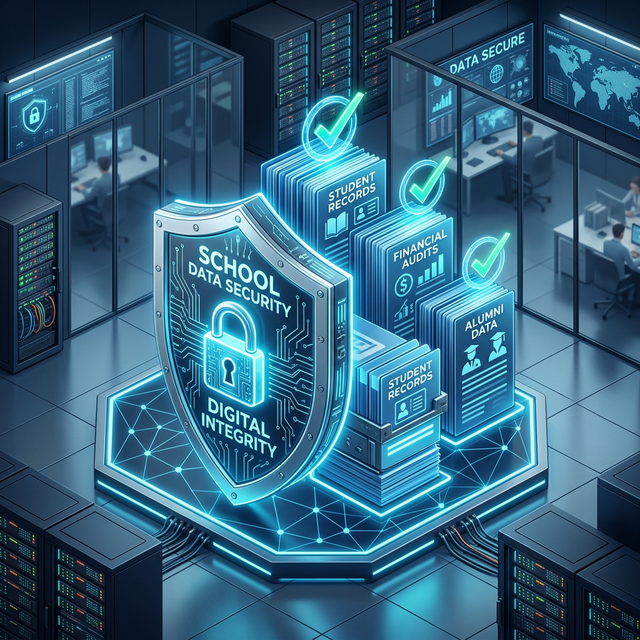
As the Chief Technology Officer (CTO) for an Educational Board, I have seen hundreds of schools fall into the "Dashboard Trap." They prioritize pretty pie charts over the structural integrity of their data. In 2026, that priorities shift is mandatory.
The Shift: From "Storing" Data to "Governing" It
For years, school ERPs were just digital filing cabinets. You put data in, and you hoped it stayed there. But with the introduction of the National Education Policy (NEP) 2020 and the Digital Personal Data Protection (DPDP) Act, schools are now legal custodians of data.
Governance means knowing exactly who modified a grade, when a fee was waived, and why a student's status was changed. It’s about accountability, not just access. In 2026, simply "storing" data isn't enough; schools must govern it to ensure sovereignty and legal safety.
The Immutability Case: Why "Delete" is a Liability
In a modern school environment, an "Edit" or "Delete" button without a strict audit trail is a backdoor for fraud. If a record can be erased, it can be manipulated. At the board level, we look for systems where data is immutable—once recorded, the history is permanent.
The Classegy Permanent Record Rule
We designed Classegy as a "Safe Haven" for school data by implementing what we call the Permanent Record Rule. In Classegy, enrollment numbers aren't just IDs; they are permanent anchors of a student's institutional DNA.
- Continuous Journey: A student's path from 'Admission' to 'Graduated' or 'Left' is a single, unalterable trail.
- Zero Gap Sequences: Enrollment sequences are protected against accidental or intentional breakage, ensuring your registers are always audit-ready.
Automating the Burden: UDISE+ & Board Audits
Every year, school staff spend weeks manually cleaning data for UDISE+ and Board inspections. This is a symptom of poor data governance.
A governed system like Classegy exports audit-ready data in one click. Because the data is validated at the point of entry and protected throughout its lifecycle, the "Cleaning" phase is eliminated. This saves hundreds of man-hours and removes the risk of "human error" during government audits.
Omni-channel as an Audit Trail
Integrated communication (WhatsApp, SMS, Email) isn't just for convenience—it’s a legal protection. When a school communicates via Classegy, it’s not just "sending a message"; it’s creating a Permanent Audit Trail of parent interaction.
If a parent disputes a notice, a fee reminder, or a disciplinary warning, the school has a timestamped, unalterable record of the delivery. This omni-channel approach ensures that the institution is always protected in case of legal or administrative disputes.
How to Audit Your Current ERP for Data Risks
The 'Delete' Test
Does your system allow staff to delete fee records or student profiles without a multi-level approval and a permanent log? If yes, you are at risk.
The UDISE+ Export
Does your ERP give you a ready-to-upload file, or do you have to 'fix' it in Excel? Manual fixing means your data has integrity gaps.
Activity Logging
Can you see who changed a student's roll number or caste category 6 months ago? If the audit trail isn't granular, it's useless.
Communication History
Can you retrieve a WhatsApp message sent to a specific parent a year ago? If communication isn't part of the student record, it's a liability.
Final Thought: In 2026, the schools that thrive will be those that treat data not as a digital byproduct, but as their most valuable institutional asset. Don't just build a dashboard; build a fortress.
Future-Proof Your School Today
Ready to move beyond basic ERP features? Join the elite circle of schools governed by Classegy.