Defeating
Server Anxiety.
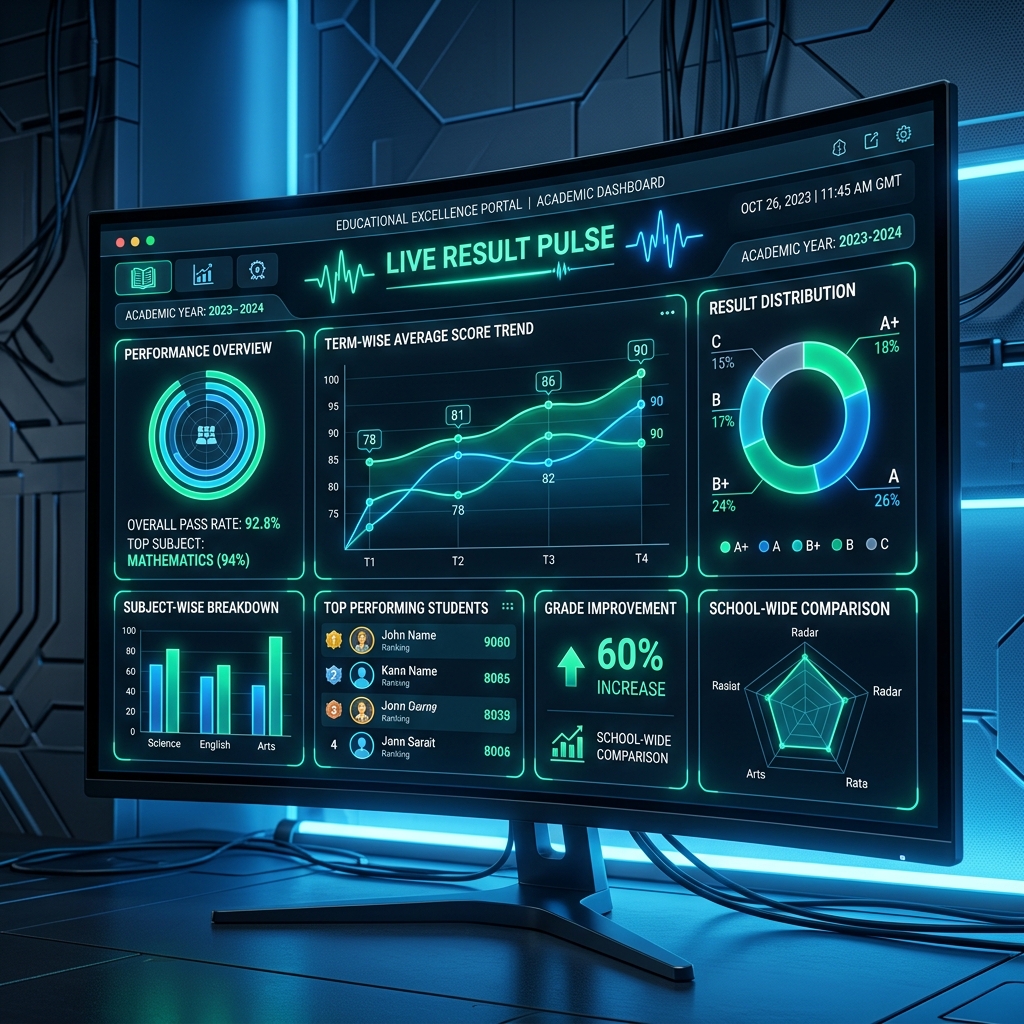
Today, April 10, marks the beginning of the "Traffic Wars." At precisely 10:00 AM, as the Board of Secondary Education, Assam (SEBA) opened its portals for the HSLC Result 2026, the digital world for millions of students converged on a single URL: **sebaonline.org**. For most, the experience is defined by the "Spinning Wheel of Doom"—the server lag that triggers what we call "Secondary Server Anxiety."
As a Senior auditor, I've observed that the reputational damage to a school doesn't come from the results themselves, but from the institution's inability to provide a stable information gateway. When the state server fails, parents instinctively look to the school app. If that app is built on legacy shared-hosting, it crashes too.
**Enter Classegy's Azurend-backed Infrastructure.** Unlike traditional ERPs that rely on fixed server instances, Classegy operates on a serverless, auto-scaling architecture powered by Microsoft Azure. When results drop in Guwahati or merit lists are verified in Jaipur, our system automatically shards databases and spins up compute power in milliseconds.
Auto-Scale Elasticity
Handles 100x traffic spikes without a single microsecond of downtime.
Broadcast Priority
WhatsApp and In-App notifications sent via dedicated enterprise-grade SMS gateways.
Real-Time Latency Map
Globally Distributed Infrastructure Core
Wait-Time Eradication
"The parent who sees their result 2 minutes faster is 2x more likely to trust your school administration for next year."
The Waitlist Arbitrage.
Today, April 10, the KVS Class 1 admission list is live. For the lucky few in Jaipur and Lucknow, the journey ends. But for thousands of other parents, the portal displays two demoralizing numbers: the **Post-Lottery Number** and the **Waiting List (WL)** status.
As a strategist, I categorize this as the "High-Intent Overflow." These parents have already committed to a quality education path; they are simply looking for a valid alternative the second they realize the KVS lottery isn't in their favor.
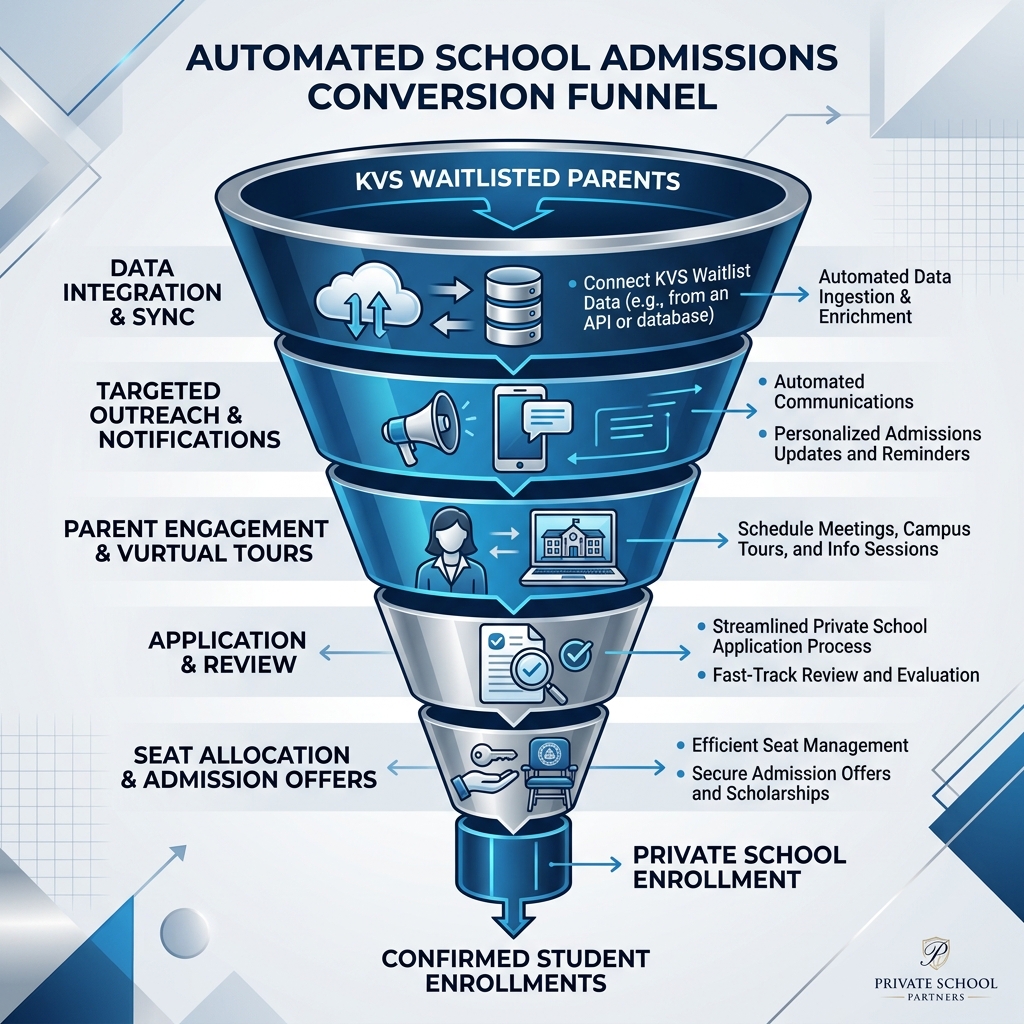
Classegy's **Automated Waitlist Management (AWM)** module allows private schools in Ludhiana or Noida to capitalize on this precise moment. Our system identifies these "KVS-Waitlisted" parents—who often have already reached out to your school for a backup plan—and automates the enrollment efficiency.
Instead of generic outreach, Classegy triggers a "Seat Opening Alert." The message is simple: *"Don't wait for a government lottery when a confirmed spotlight is waiting for your child at [Your School Name]."*
Instant Conversion Triggers
Connects your CRM data with live admission status to offer seats the moment a KVS vacancy is deemed unlikely.
Post-Lottery Outreach
Tailored messaging for parents seeing high WL numbers, emphasizing your school’s 2026 academic readiness.
The OSM Revolution.
"Starting April 10, CBSE is accelerating the transition to 100% digital evaluation. The era of the red pen and paper stack is effectively over."
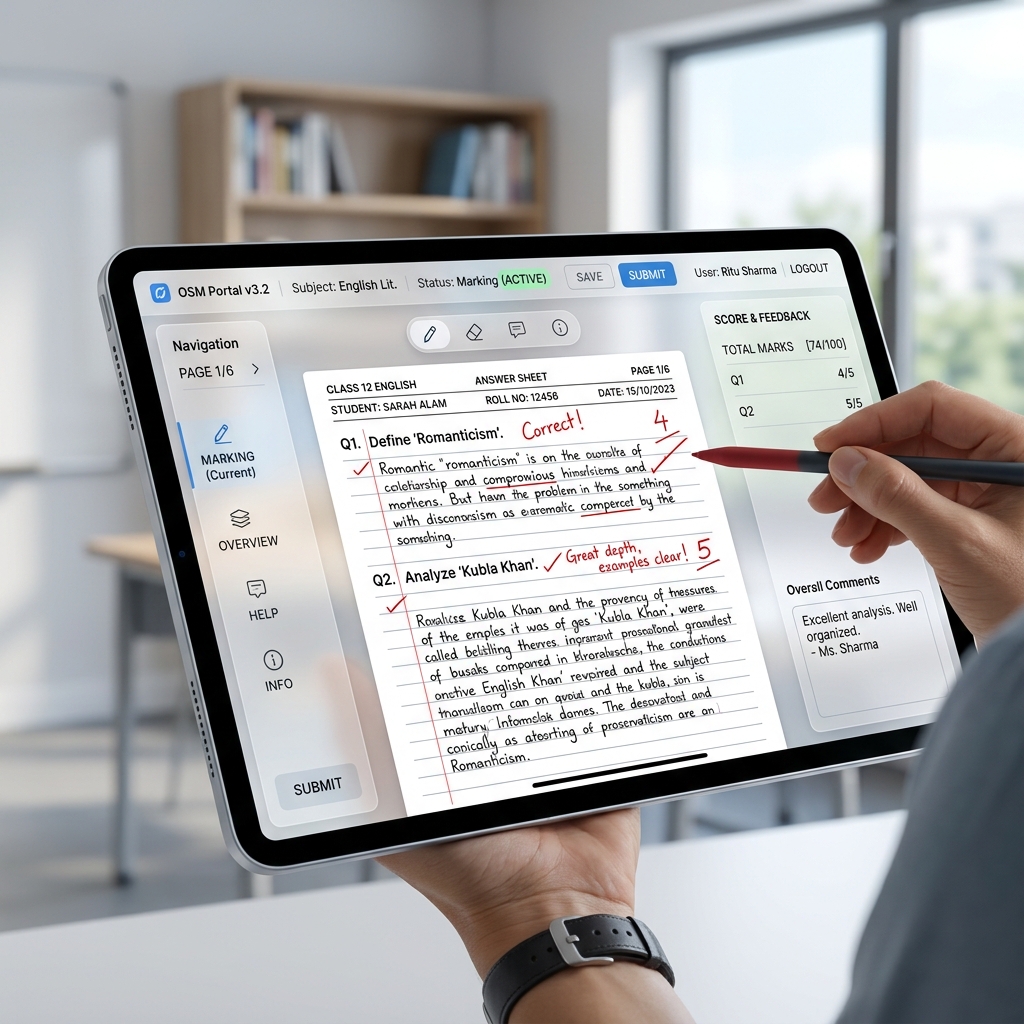
On-Screen Marking (OSM) is no longer a pilot project; it is a regulatory mandate. Schools that do not train their teachers in digital grading today will face an institutional crisis during the 2026 board evaluation season.
**Classegy’s Digital Examination Module** is engineered to mirror the exact UI/UX of the CBSE OSM portal. This isn't just about scanning papers; it's about shifting the pedagogy of grading. Teachers can add sticky-note annotations, use automated rubrics, and provide video-feedback stems—all within a secure, audited environment.
By grading internal assessments digital-first all year long, your staff develops the muscle memory required for board exams. When CBSE monitors in Delhi, Noida, or Lucknow ask for assessment proof, you don't hand them a folder—you grant them a "View-Only" token to your digital archives.
The Permanent Record.
Today is the critical day for **Form-VI updates in Haryana** and final **internal mark audits in Prayagraj, Varanasi, and Meerut**. For administrators in Rohtak or Lucknow, the pressure of "Result-Ready" data is at its peak.
The most common regulatory failure on April 10? The **Duplicate SRN Error**. When new admissions are processed today without a legacy check, schools often accidentally enroll students who are still "active" in other institutions' rosters on the state portals (MIS in Haryana, or UDISE+ nationally).
Classegy addresses this through the **Immutable Enrollment Number (IEN)**. Every student record created today is instantly cross-referenced with your historical data and synced with the **APAAR ID (One Nation, One Student ID)**.
"Compliance isn't a task—it's the architecture of trust. Without a synced APAAR ID, your student doesn't exist to the government in 2026."
APAAR Sync
Automatic validation with the Academic Bank of Credits (ABC) portal.
SRN Lock
Advanced collision detection to prevent duplicate entries on state MIS portals.
Identity Verification Hub
Auditable Data Foundation v4.2
The 2026-27
Readiness Grant.
"Results are coming, lists are out. Is your school’s data infrastructure ready for the 2026-27 demand? Secure your reputation with Classegy."
Digital Foundation Period
Price Stability Guarantee
Unlimited Legacy Data Ingest
The Reputation
Standard.
From the tea gardens of Assam to the industrial clusters of Ludhiana, the verdict is clear: A school is only as strong as the infrastructure that holds its data. Lead with Classegy.
Request Strategy Session